
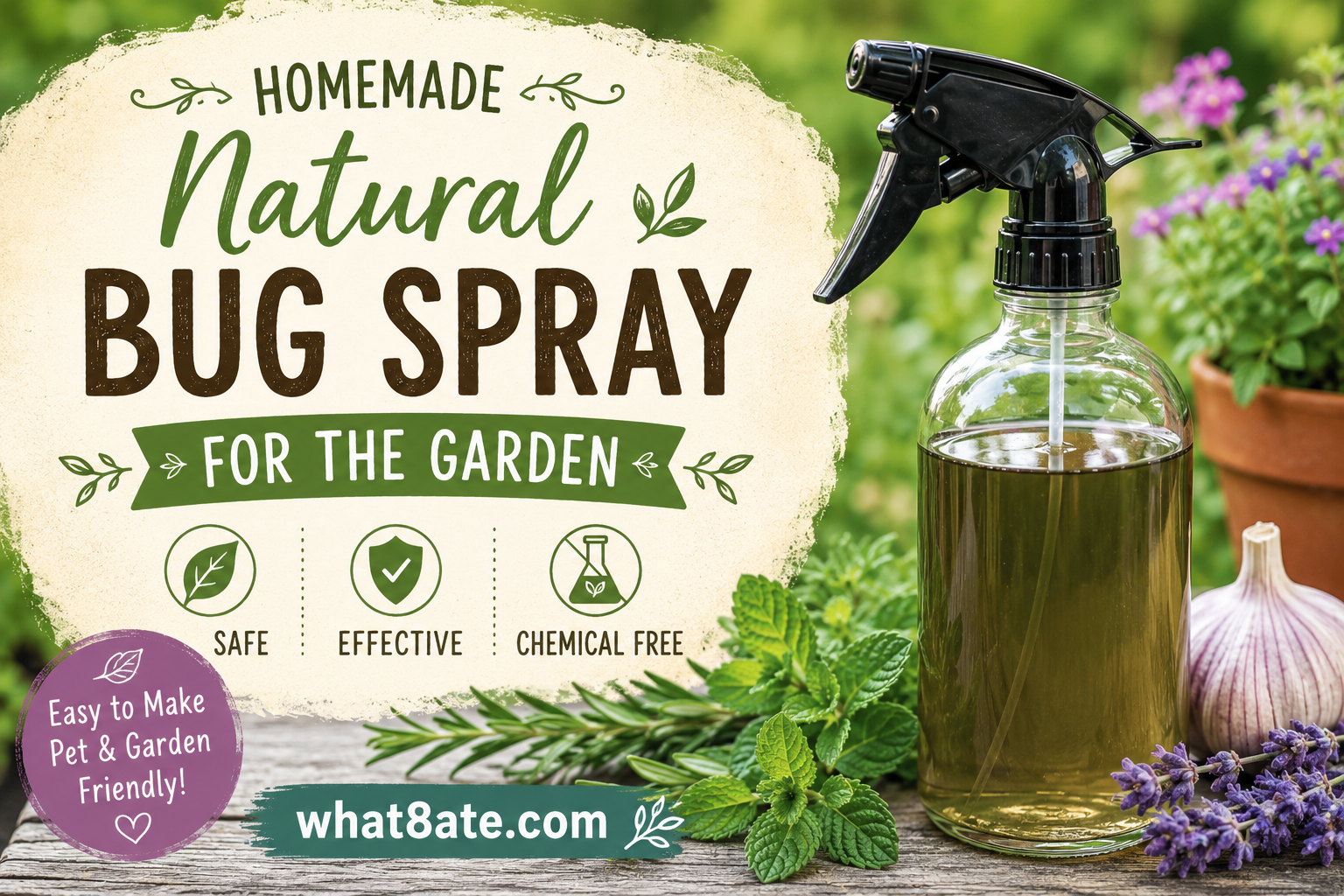
If you’re looking for a simple, inexpensive way to help keep pests out of your garden without reaching for harsh chemicals, this is the recipe I keep coming back to year after year.
I’ve been using this homemade natural bug spray for years, and it has worked incredibly well in my garden. One of my favorite things about it is that it’s made from ingredients I almost always have on hand. There’s no need to buy expensive specialty products, and I don’t have to worry about spraying synthetic chemicals on the food we’re growing or adding unnecessary chemicals to our soil.
This spray is safe to use around pets, your garden, and your landscaping when used as intended. While no homemade spray is a miracle cure for every pest, I’ve found it to be an excellent first line of defense for many common garden insects.
The only ingredient I purchase for this (and you can omit it if you want, but I highly recommend it especially if you get earwigs) is the Neem oil. This is the one that I use.
Why I Love This Recipe
- Made with simple pantry and garden ingredients
- Budget-friendly
- No harsh synthetic pesticides
- Safe to use around pets and edible gardens
- Easy to make in large batches
- Stores extremely well
I spray it around the entire garden, directly on plants, around raised beds, along fence lines, and anywhere I notice (or suspect) insect activity. I also like to spray preventative areas before pest problems become established.
Whole Ingredients vs. Powders and Essential Oils
I almost always make this recipe using fresh, whole ingredients because that’s what I have growing in my garden.
For example:
- Fresh peppermint branches instead of peppermint essential oil
- Whole or minced garlic instead of garlic powder
When using fresh ingredients, they need time to release their natural oils and compounds into the water.
Here’s my process:
- Combine all of the ingredients in a large pot.
- Simmer gently for 1 to 2 hours.
- Remove from the heat.
- Let everything steep overnight.
- Strain extremely well before pouring it into your garden sprayer.
If you’re using powdered herbs or essential oils instead of fresh ingredients, you can likely skip the long simmering process. I would simply mix everything together and let it sit for a couple of hours before straining.
I haven’t personally tested every combination of powders and essential oils, so I can’t say whether they work exactly the same as fresh ingredients, but they may be a convenient option if that’s what you have available.
Straining Is Important
One tip that will save you a lot of frustration:
Strain the finished spray really well.
Tiny bits of herbs or garlic can clog the nozzle on your garden sprayer. I usually strain mine through a fine mesh strainer, and if needed, I’ll strain it a second time through cheesecloth to remove the smallest particles.
Surprisingly Long Shelf Life
One thing that has surprised me over the years is how well this spray keeps.
I often leave it right in my garden sprayer throughout the growing season, and it stays effective. I’ve even forgotten about a batch over the winter, only to find it still smelled strong and worked well the following spring.
Because everyone’s storage conditions are different, use your own judgment before using an older batch. If it develops mold, an unusual smell, or anything seems off, simply make a fresh batch. Since it’s inexpensive to make, it’s easy to replace if needed.
A Few Final Thoughts
Every garden is different, and pest pressure changes from year to year. No homemade spray can guarantee complete protection from every insect, but this recipe has become one of the tools I rely on season after season.
If you’re trying to garden more naturally, reduce your use of chemicals, or simply save money, I hope you’ll give it a try.
I’d love to hear how it works in your garden! If you make it, leave a comment below and let me know what pests you’ve had success with.
Happy Gardening!
⬇️ Recipe and Instructions Below ⬇️

Ingredients
- A handful of Peppermint branches
- 2-4 cinnamon sticks
- 5 T minced garlic (or 3-5 garlic heads slightly crushed)
- 2 T Cayenne pepper powder
- Add when you put into the sprayer:
- 1/4 c Neem Oil
- 2-4 pumps of dish soap
Instructions
Place the peppermint, garlic, cinnamon and cayenne into a large stock pot and fill with water. Bring to a simmer for about 2 hours. Turn off the burner and let everything sit in the pot overnight.
Strain through a fine mesh strainer, or use cheesecloth. This step is important because if you don't strain it well it will clog your sprayer.
Once strained well, pour into your sprayer and add 1/4 c Neem oil (this is the one I use: https://amzn.to/4p0O6pF) and a few pumps of dish soap.
That's it! Now you're ready to spray it onto your plants!
Notes
This recipe is a combination of common and proven pest deterrents- the amounts of items used in the recipe isn't set in stone. You can omit any, or add something else that you've found to work. Neem oil is optional, however I add it because it's great at getting rid of earwigs which we used to have (but hardly see anymore now even though our neighbors have them) The dish soap just helps the spray stick to the plants better.